
Chris,
I’ve spent about three days going as far back over time in your cupboard to get to a funny response you wrote to someone asking about the moon. I found a few of my old questions as well. Unfortunately it would only go back to 11th of January 2010.
I once asked about a ‘green telephone’ in a demo of Please Don’t Go. I was referring to a demo version actually, not the real one, and someone commented saying it was ‘and left me alone with Lee Parry and a green telephone.’
I also once asked if you thought my little demos are too Madness-sounding and you encouraged me to keep going. Unfortunately I still haven’t gotten any such band together at all. I write lyrics quite often, actually, even doing a song trivia on my blog about them (like on the back of the Keep Moving album) once. Most recently I wrote a song I called ‘Summer Morning’ covering lyrics, organ, guitar, bass and drums (so the entire aspects of a song). But no one to play or rehearse or record it with.
I’ve got many written lyrics to songs and a few music ideas but no one is interested really. After your encouragement I put an ad of sorts up on my blog. Since this Spring no one has answered. On YouTube, sadly, I’ve gotten my share of very cruel or ignorant comments on any bass or drum covers I’ve done on your songs. But whatever.
Well I hope the band is still going cool and stuff. I still find your responses often witty. What would be ironic is if this ‘question’ was yet another full thousandth one like in 2009, but that’s just a funny idea. Unfortunately I can’t ever see Madness in concert because I live in Canada and have never flown overseas before. I think the UK is the best place ever in everything, and I have a ludicrous crush on an Irish actress.
I guess if I could come up with an appropriate question as this format expects, I would ask…shoot. I don’t know. I managed to add Mike Barson on Facebook and I find it pretty nuts when he appears online…what’s this genius pianist doing on Facebook in my chat list?? But I never bother him.
Okay, I guess I will ask about what it’s like not being an unloader in receiving at Wal-Mart. Like me. I’ll bet it’s pretty good and fun, but I have to pay for college somehow (I am taking photography and I love the ingenuity of a lot of your album covers).
Hope life is amiable, genial, and in all senses positive and happy for you Chris. I keep hearing about how often it rains in England. Well, I’m sure it’s sunny most of the time no? In Ottawa here it is either only too hot or only too cold.
Justin
Hi Justin
Don’t let them negative comments get you down. If it all comes to nothing, at least you’ve done more than some people. Is there anyone you work with who might be interested in making some music?
I really respect you for working to pay your way through college, by the way. That moon question? I wish I could remember it for you.
all the best Chris


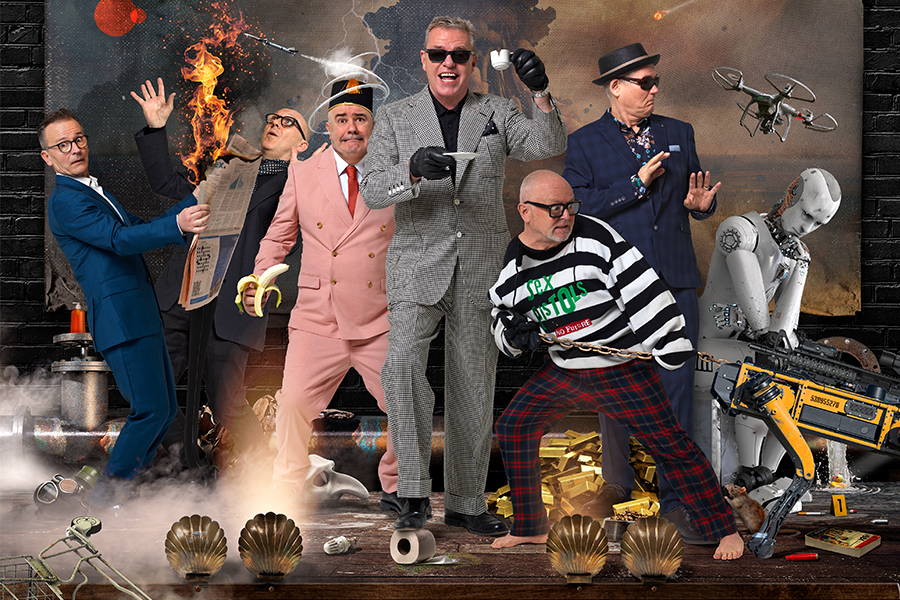

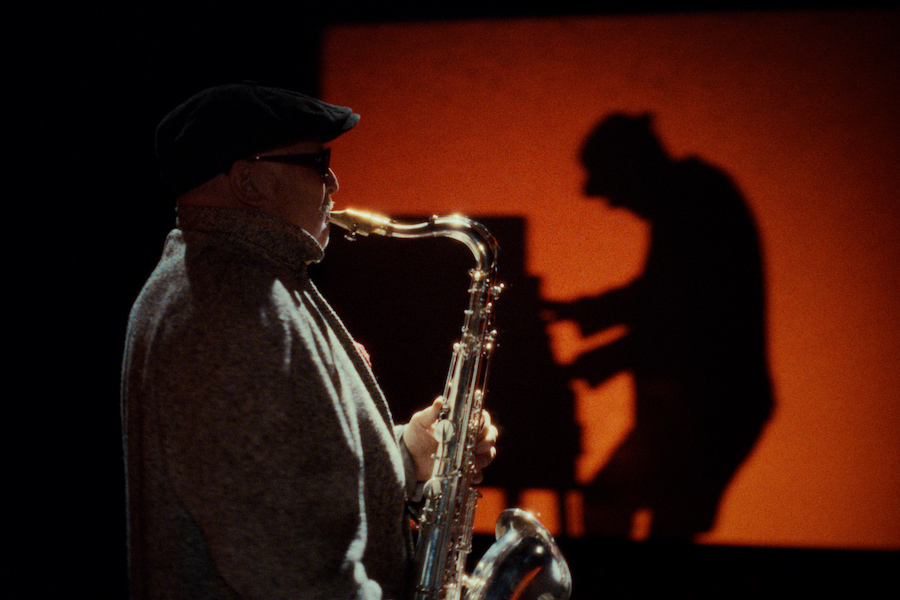
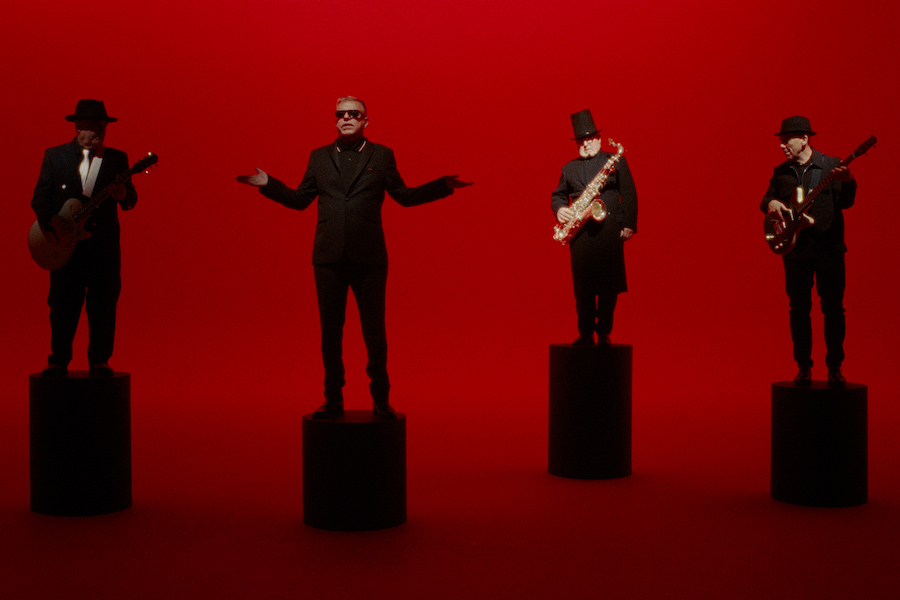

How sad am I? Been a bit bored lately so was looking at the archive, and I think I came across the moon question! It was from July 2009 –
The Moon
Why is the same side of the moon always facing us?
Thanks,
Jack
Dear Jack
Lunar phase (or Moon phase) refers to the appearance of the illuminated portion of the Moon as seen by an observer, usually on Earth. The lunar phases vary cyclically as the Moon orbits the Earth, according to the changing relative positions of the Earth, Moon and Sun. One half of the lunar surface is always illuminated by the Sun (except during lunar eclipses), and hence is bright, but the portion of the illuminated hemisphere that is visible to an observer can vary from 100% (full moon) to 0% (new moon). The boundary between the illuminated and unilluminated hemispheres is called the terminator.
Contents
[hide]
* 1 Overview
* 2 Names of lunar phases
* 3 Calendar
* 4 See also
* 5 External links
* 6 Educational aids
[edit] Overview
The lunar phase depends on the Moon’s position in orbit around the Earth and the Earth’s position in orbit around the sun. This diagram looks down on Earth from north. Earth’s rotation and the Moon’s orbit are both counter-clockwise here. Sunlight is coming in from the right, as indicated by the yellow arrows. From this diagram we can see, for example, that the full moon will always rise at sunset and that the waning crescent moon is high overhead around 9:00 AM local time.
Lunar phases are the result of looking at the illuminated half of the Moon from different viewing geometries; they are not caused by shadows of the Earth on the Moon that occur during a lunar eclipse. The Moon exhibits different phases as the relative geometry of the Sun, Earth and Moon change, appearing as a full moon when the Sun and Moon are on opposite sides of the Earth, and as a new moon (also named dark moon, as it is not visible at night) when they are on the same side. The phases of full moon and new moon are examples of syzygies, which occur when the Earth, Moon and Sun lie (approximately) in a straight line. The time between two full moons (and between successive occurrences of the same phase) is about 29.53 days (29 days, 12 hours, 44 minutes) on average (hence, the concept of a timeframe of a period of time of an approximated month was derived). This synodic month is longer than the time it takes the Moon to make one orbit about the Earth with respect to the fixed stars (the sidereal month), which is about 27.32 days. This difference is caused by the fact that the Earth-Moon system is orbiting about the Sun at the same time the Moon is orbiting about the Earth. The actual time between two syzygies is variable because the orbit of the Moon is elliptic and subject to various periodic perturbations, which change the velocity of the Moon.
It might be expected that once every month when the Moon passes between Earth and the Sun during a new moon, its shadow would fall on Earth causing a solar eclipse. Likewise, during every full moon we might expect the Earth’s shadow to fall on the Moon, causing a lunar eclipse. We do not observe a solar and lunar eclipse every month because the plane of the Moon’s orbit around the Earth is tilted by about 5 degrees with respect to the plane of Earth’s orbit around the Sun. Thus, when new and full moons occur, the Moon usually lies to the north or south of a direct line through the Earth and Sun. Although an eclipse can only occur when the Moon is either new or full, it must also be positioned very near the intersection of Earth’s orbit plane about the Sun and the Moon’s orbit plane about the Earth (that is, at one of its nodes). This happens about twice per year, and so there are between 4 and 7 eclipses in a calendar year. Most of these are quite insignificant; major eclipses of the Moon or Sun are relatively rare.
CB